Former senior CARICOM official questions re-appointment of secretary general
Loading article...
-
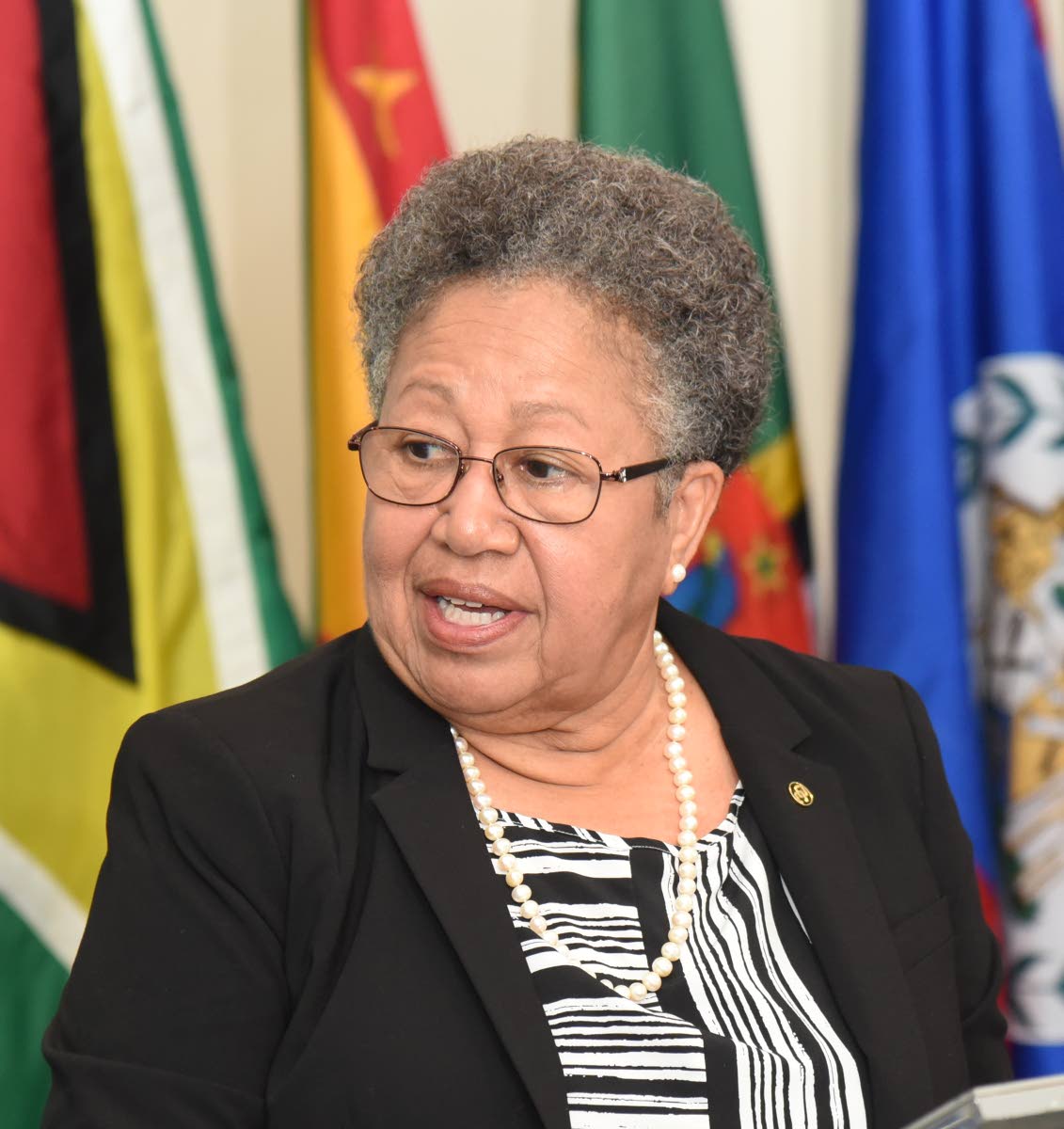 Dr Carla Barnett, secretary general of CARICOM.
-
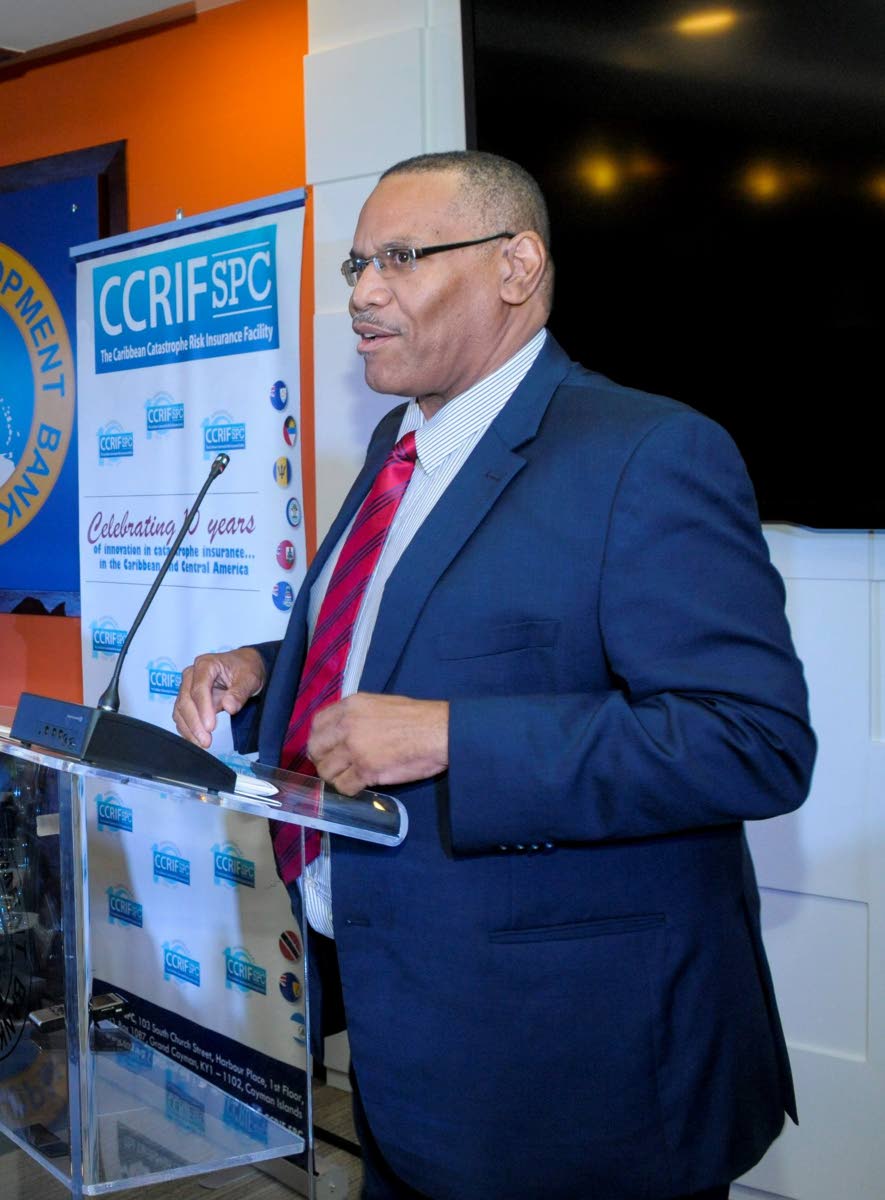 Joseph Cox, former CARICOM assistant secretary general for trade and economic integration.
CMC
Former assistant secretary general (ASG) of the Caribbean Community (CARICOM), Joseph Cox, is raising questions regarding the re-appointment of Dr Carla Barnett as the secretary general of the 15-member regional integration grouping.
“Can Dr Carla Barnett effectively serve another five-year term in the face of open objection, procedural concerns, and underlying divergence among member states, because in CARICOM, and indeed in small-state regionalism more broadly, authority is not imposed,” said Cox, who resigned as the ASG for economic integration, innovation and development in August 2024.
“It is conferred through consensus, reinforced through process, and sustained through trust. Remove those pillars, and the position may remain legally intact. But operationally it becomes far more difficult to hold.
“And that is the real issue now confronting the community. These are not procedural questions. They are questions of institutional direction and institutional credibility,” Cox said in his weekly Caribbean Business Review (CBR) podcast yesterday.
Required majority
Last week, in a brief statement, the CARICOM chairman and St Kitts and Nevis prime minister, Dr Terrance Drew, said that Barnett had attained the “required majority” from among regional leaders regarding her re-appointment at last month’s CARICOM summit held in Basseterre.
However Trinidad and Tobago has insisted that it was “not invited” to the deliberations that led to Barnett’s re-appointment, with Port of Spain adding that Antigua and Barbuda and The Bahamas were also absent.
“I emphatically put on the record … that Trinidad and Tobago was not invited by email, telephone or in person to that meeting where that particular decision was made,” that country’s CARICOM and foreign affairs minister, Sean Sobers, told the Trinidad and Tobago Parliament last Friday.
Trinidad and Tobago Prime Minister Kamla Persad-Bissessar, who left the Basseterre summit prior to the retreat of regional leaders on Nevis, has since threatened to withdrawn funding for CARICOM.
Cox, who served at the Guyana-based CARICOM Secretariat for nine years, indicate that, on the surface, the re-appointment of Barnett appears to have been “a routine decision, one that ensures continuity at the administrative level of the community”.
He added, “But the reality is far more complex. Trinidad and Tobago has formally objected to the re-appointment, not on the basis of personality, but on the basis of process, arguing that it was excluded from deliberations and that the matter was neither placed on the formal agenda nor recorded in the official communiqué.”
Cox said the statement by Port of Spain that, along with The Bahamas and Antigua and Barbuda, they were also not allowed to participate in the retreat where these discussions reportedly took place, effectively left “multiple member states outside of a decision of significant institutional importance”.
Proportionality
He added, “Further, additional information coming to hand also indicates that Haiti and Montserrat were also not represented at the leaders’ retreat at the highest level, and that matters because this is not just about participation, it’s about proportionality and influence.
“Trinidad and Tobago accounts for approximately 22 per cent of CARICOM’s budget, with The Bahamas and Haiti also meaningful contributors. When countries of that scale are excluded, the issue immediately shifts from administration to institutional legitimacy.”
However Cox said that there was also a second layer to the issue, noting that Drew has “framed the decision as having secured the, quote, required majority, unquote”.
Continuing, he noted, “Now, that language may satisfy a technical threshold, but it departs from a longstanding tradition within regional institutions where senior appointments are typically resolved through consensus, not arithmetic.”
The Jamaica-born economist said consensus is not ceremonial and that “it is what binds small states into a functioning community”.
Cox added: “And that’s particularly relevant here, because it’s also understood within regional policy circles that a question of Dr Barnett’s re-appointment was not without sensitivity.”
Performance and direction
He noted that “there had been varying levels of comfort across member states regarding the performance and direction of the secretariat, meaning that any decision on a second term was always likely to require careful consultation and broad alignment”.
Cox said that makes the process even more important, not less.
He said that, juxtaposed against Persad-Bissessar’s “biting criticism of the CARICOM Secretariat and its management at the official opening of the very meeting where the reappointment was made a mere two days later, is even more poignant.
“And then there’s a procedural question. If this decision was taken at a heads-up government meeting in St Kitts and Nevis, was there no reference to it in the official communiqué? Was it formally tabled? And if discussed in retreat, why was it not subsequently recorded in plenary as required for institutional validity?”
Cox said there was also a further question in that “if this decision was taken on February 26, why was it only publicly communicated on March 25, nearly one month later?”
He said this raises a further procedural question.
“Article 24 of the revised Treaty of Chaguaramas provides that the secretary general is appointed by the Conference on the recommendation of the Community Council and re-appointment may be made by the Conference.
“But the Treaty is silent on the procedure for re-appointment and does not explicitly prescribe a voting method. That makes the sequence of process critical. Was there a recommendation of the Community Council in this case? And if so, how was it arrived at?
Sharper focus
“Because if there was, how were key member states unaware? If not, the issue becomes one of compliance. And this brings the issue into sharper focus under Article 28 of the revised Treaty of Chaguaramas. The Treaty provides that decisions of the Conference are to be taken by an affirmative vote of all members with provision for validity where three-quarters support a decision in the case of abstentions.”
However Cox said the framework presumes participation, noting “it presumes that member states are present, aware, and able to take a position whether in support or in abstention.
“Where that condition is in question, the issue is no longer simply voting, it is whether the process leading to the vote was complete. At that point, the issue is no longer disagreement. It becomes contestability.”
He said while the Treaty provides for re-appointment by the Conference, the absence of clear recommendation, full participation, and formal recording raises a deeper question, not just of process, but of whether the decision meets the full threshold of institutional validity.
“More broadly, it raises the question of whether CARICOM is drifting from a consensus-based community towards a more fragmented, interest-driven structure,” he added.
Second term
Last Friday, Barnett deflected mounting concerns about her appointment for a second term, referring questions regarding her re-appointment to the CARICOM chairman.
“No, no, sir. You don’t need to ask me, you need to ask the chairman. I don’t participate in those discussions. Those discussions are held among the leaders,” she told the Guyana-based Demerara Waves Online News when asked for a reaction to concerns that were being raised about her re-appointment.
“I don’t have any concerns,” said Barnett, an economist, who became the eighth CARICOM secretary general on August 15, 2021, by “unanimous appointment” of the regional leaders.
She remained silent when asked if she believes she should step down.