Tax tweak
Loading article...
-
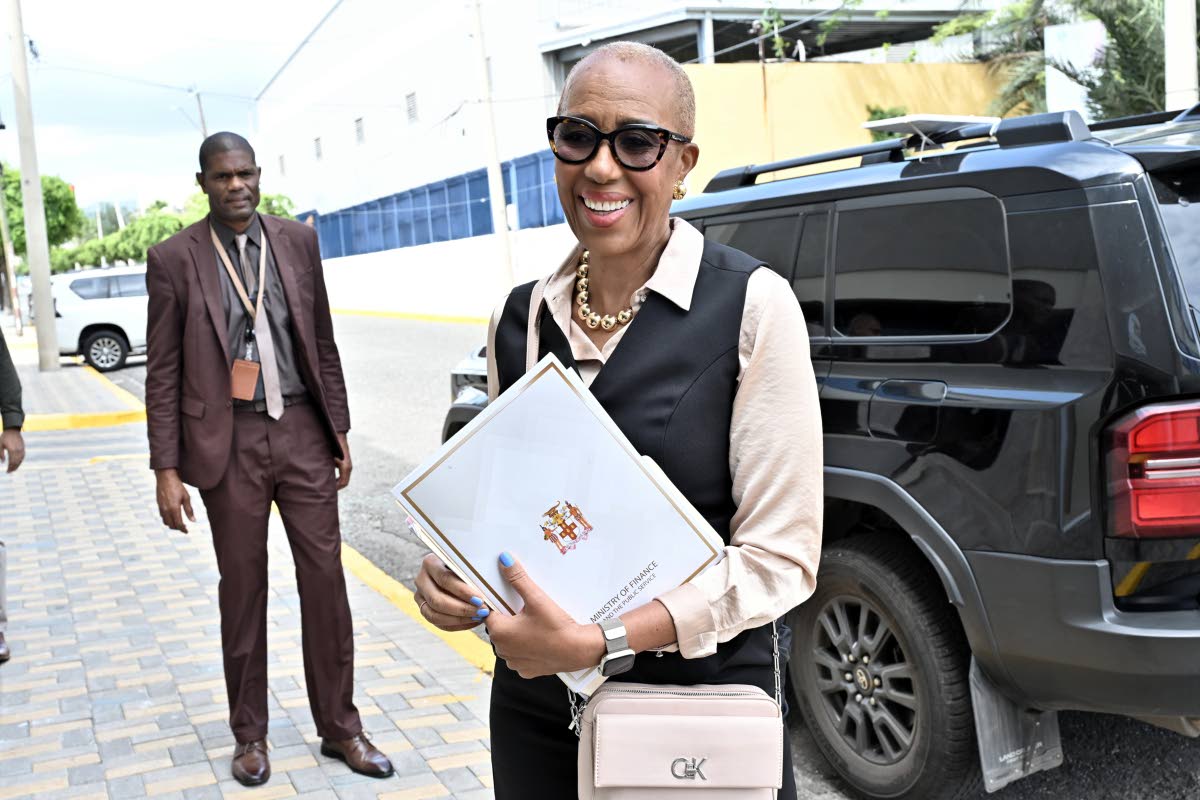 Fayval Williams, minister of finance and the public service, arrives at Gordon House yesterday with a copy of her closing presentation in the 2026-2027 Budget Debate.
-
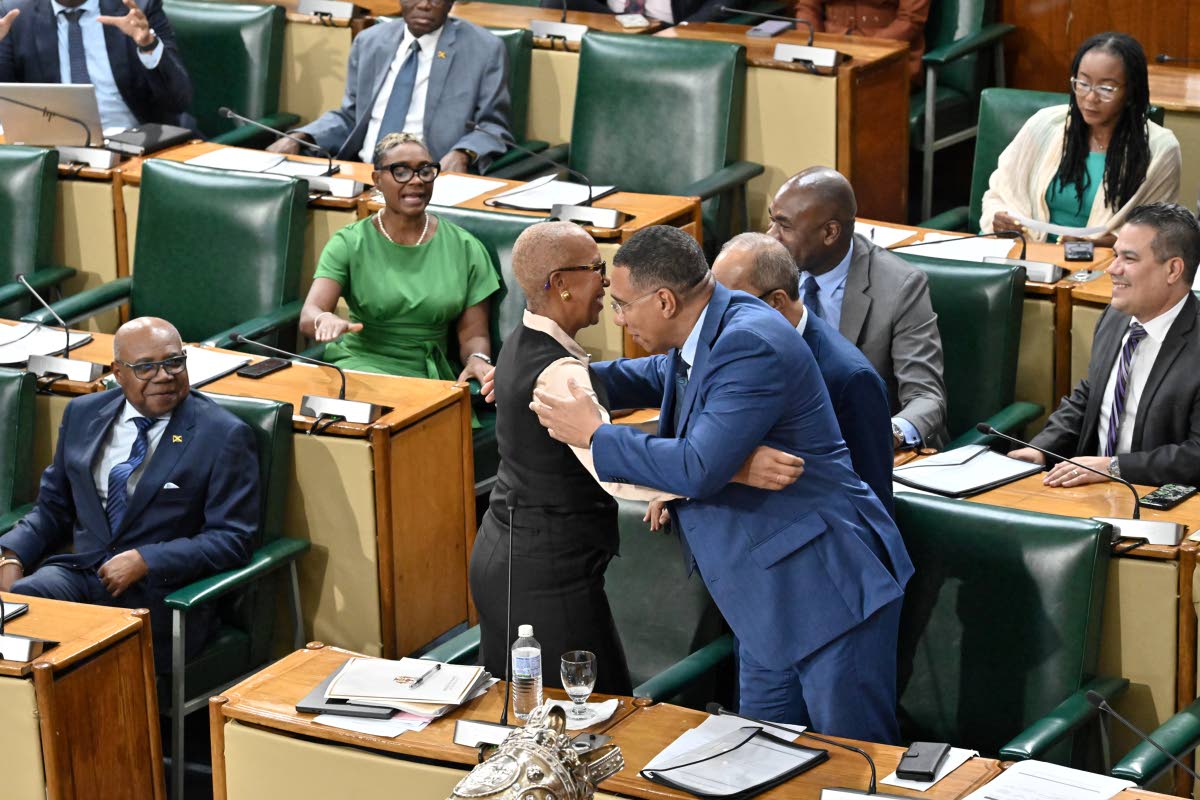 Prime Minister Dr Andrew Holness embraces Fayval Williams, minister of finance and the public service, after her closing of the 2026-2027 Budget Debate in the House of Representatives yesterday.
-
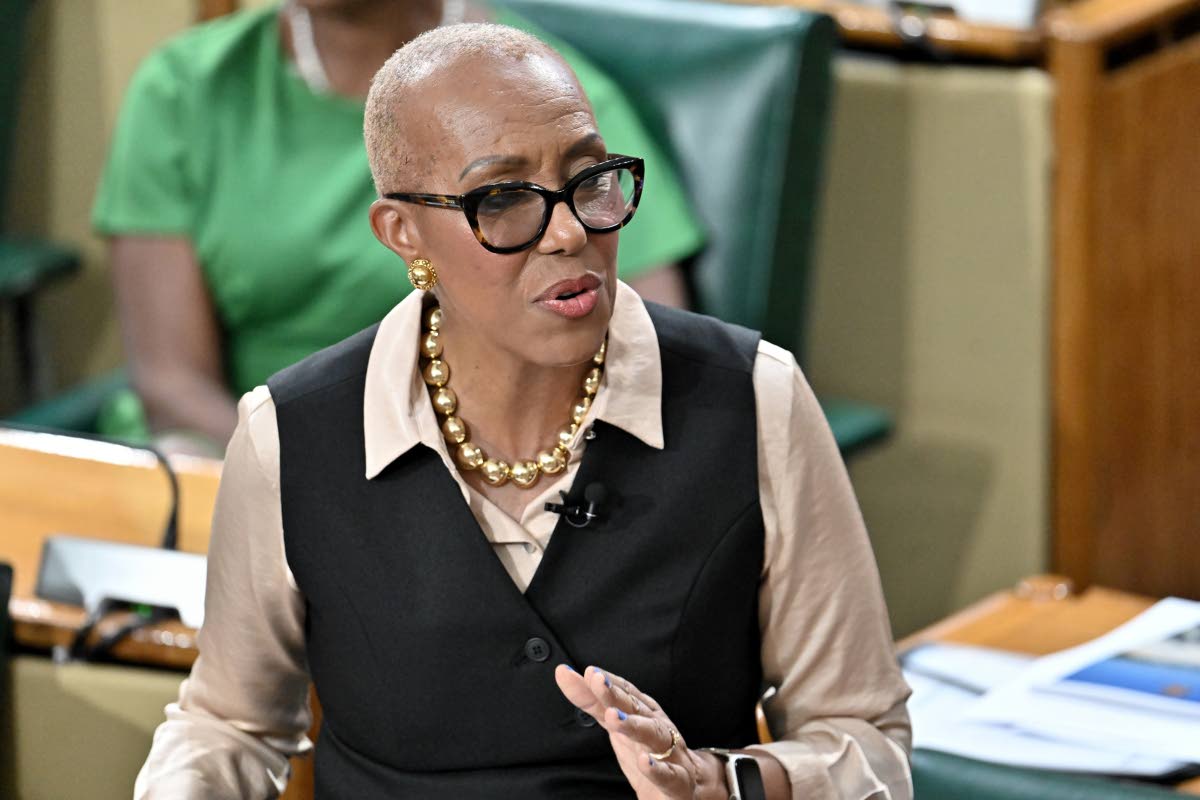 Fayval Williams, minister of finance and the public service, closes the 2026-2027 Budget Debate in the House of Representatives yesterday.
The Government has adjusted its tax policy in relation to the Special Consumption Tax (SCT) on non-alcoholic sweetened beverages and the Environmental Protection Levy on domestic goods, but the measures will remain revenue neutral.
In closing the 2026-2027 Budget Debate in the House of Representatives yesterday, Finance and the Public Service Minister Fayval Williams said the SCT on non-alcoholic sweetened beverages would now be levied at a rate of 22 cents per gram of added sugar rather than on the volume of the beverage as previously announced.
“A beverage with no added sugar will attract no SCT. A beverage with modest sugar will attract a modest SCT. A beverage with higher sugar content will attract a higher SCT directly and proportionally,” Williams explained.
When the announcement was made on February 26, the finance minister said the SCT on non-alcoholic beverages would be set at $0.02 per milllitre, which would yield $10.1 billion in revenue.
However, during her closing contribution to the Budget Debate yesterday, Williams said that following the announcement of the new tax measure, stakeholders pointed out that “a flat volume-base tax does not vary by sugar content and, therefore, it does not distinguish between a low-sugar and a high-sugar product”.
She said the Government assessed the stakeholders’ concerns and found that there was merit in their suggestion.
Williams said the change in the approach to the SCT on non-alcoholic sweetened beverages would make it more effective and equitable.
SCT TO BE BASED ON SUGAR CONTENT
Further, she said the SCT on non-alcoholic sweetened beverages was conceived from the beginning as a health measure.
“We have redesigned the SCT to be based directly on sugar content rather than the volume of the beverage,” she stressed.
With the adjustment in how the tax would be applied, Williams said this now requires some lead time for manufacturers, importers, and Tax Administration Jamaica to prepare for its implementation.
In this regard, the minister said the SCT would now take effect on May 1 instead of April 1 as was previously stated.
Williams said the new structure creates a genuine commercial incentive for manufacturers and importers to reduce the sugar content of their products.
“Every lower-sugar product on our shelves is a step in the right direction,” she said.
Turning to the increase in the Environmental Protection Levy, Williams said stakeholders also approached the Government, raising concern that the application of the tax would place manufacturers at a disadvantage relative to importers.
The Government had proposed an increase in the rate from 0.5 per cent to 0.8 per cent for both imports and domestic goods while also expanding the base on which the domestic levy is charged from 75 per cent of sales to 100 per cent.
However, Williams announced yesterday that the Government would retain the 75 per cent of sales base for manufacturers.
“However, to maintain revenue neutrality with the retention of the 75 per cent manufacturers’ base, we’ll have to increase the Environmental Protection Levy rate modestly from 0.8 per cent as previously announced to 0.85 per cent for both manufacturers and importers,” she said.
The levy is expected to yield $3.6 billion for the new fiscal year.
edmond.campbell@gleanerjm.com