Embracing her destiny
Loading article...
-
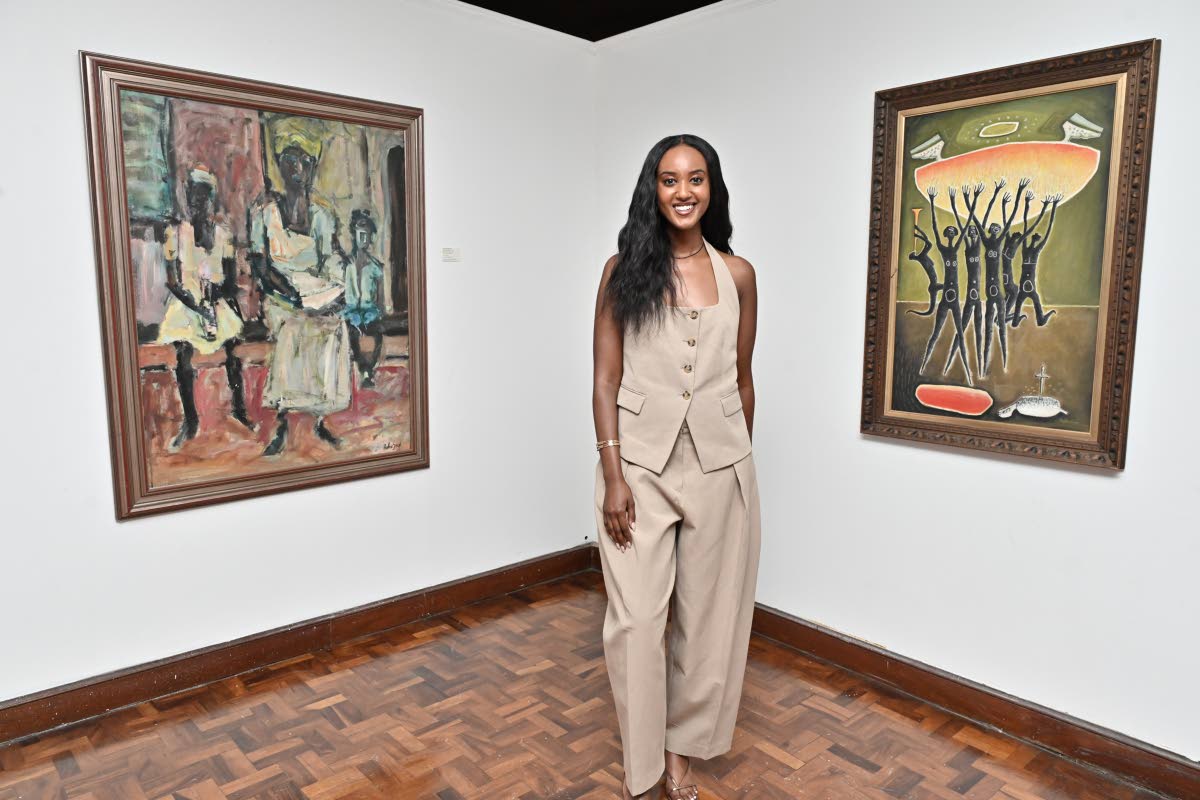 Misgana African Art founder and curator Seble Asfaw is the woman in the middle of Karl Parboosingh’s ‘Jamaican Gothic’ (1968), oil on hard board (at left) and Carl Abrahams’s ‘Hallelujah, Hallelujah, Hallelujah’ (1965), oil on hard board.
-
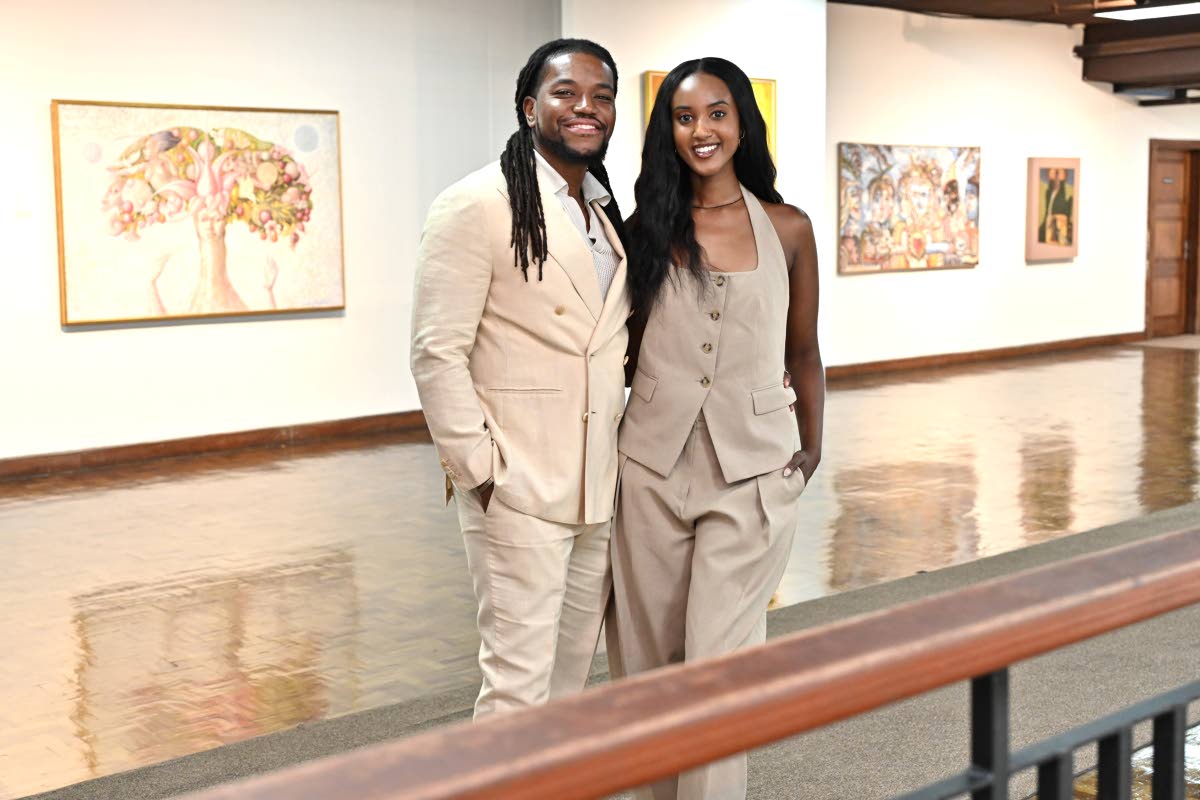 After immersing in the iconic artwork in The Kapo and the Edna Manley Galleries, Asfaw and her emergency room physician husband Kurtious Loney-Walsh embrace on their afternoon outing at the National Gallery of Jamaica.
-
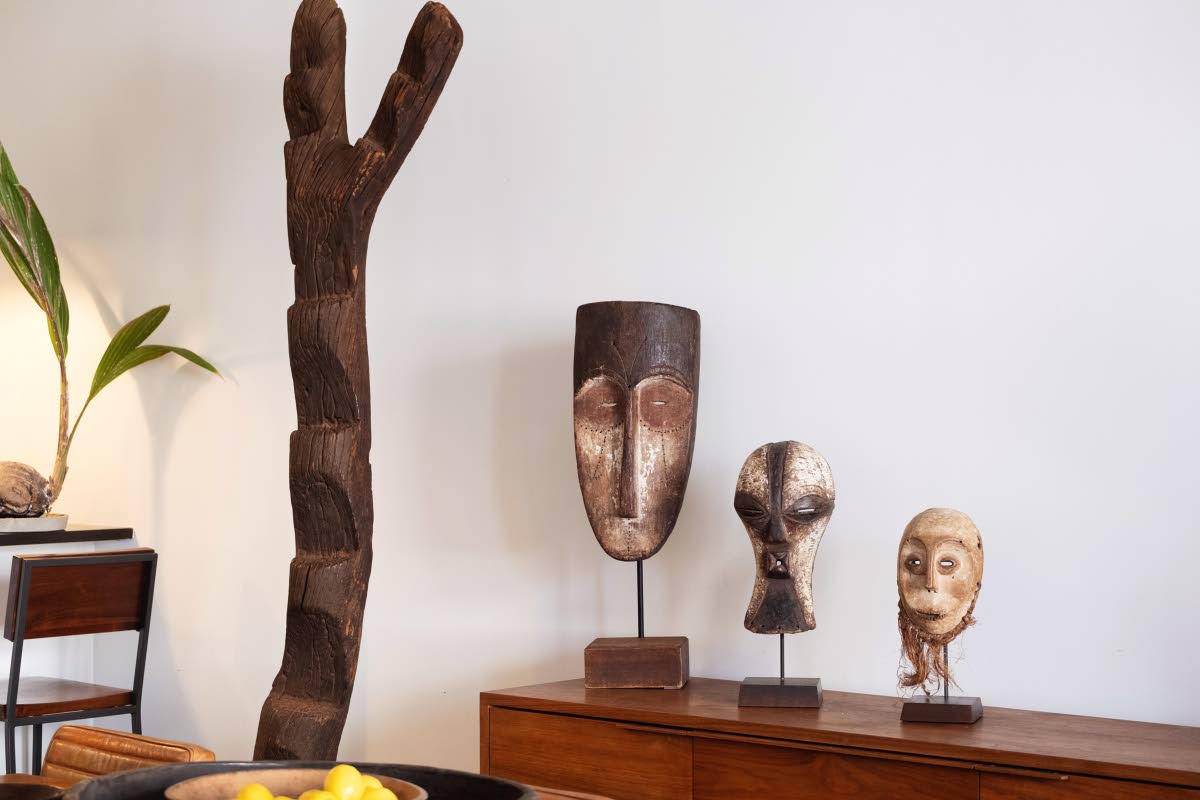 From left: Dogon ladder, from Mali; Fang mask, from Gabon and a Kifwebe mask and Lega mask, both from Congo.
-
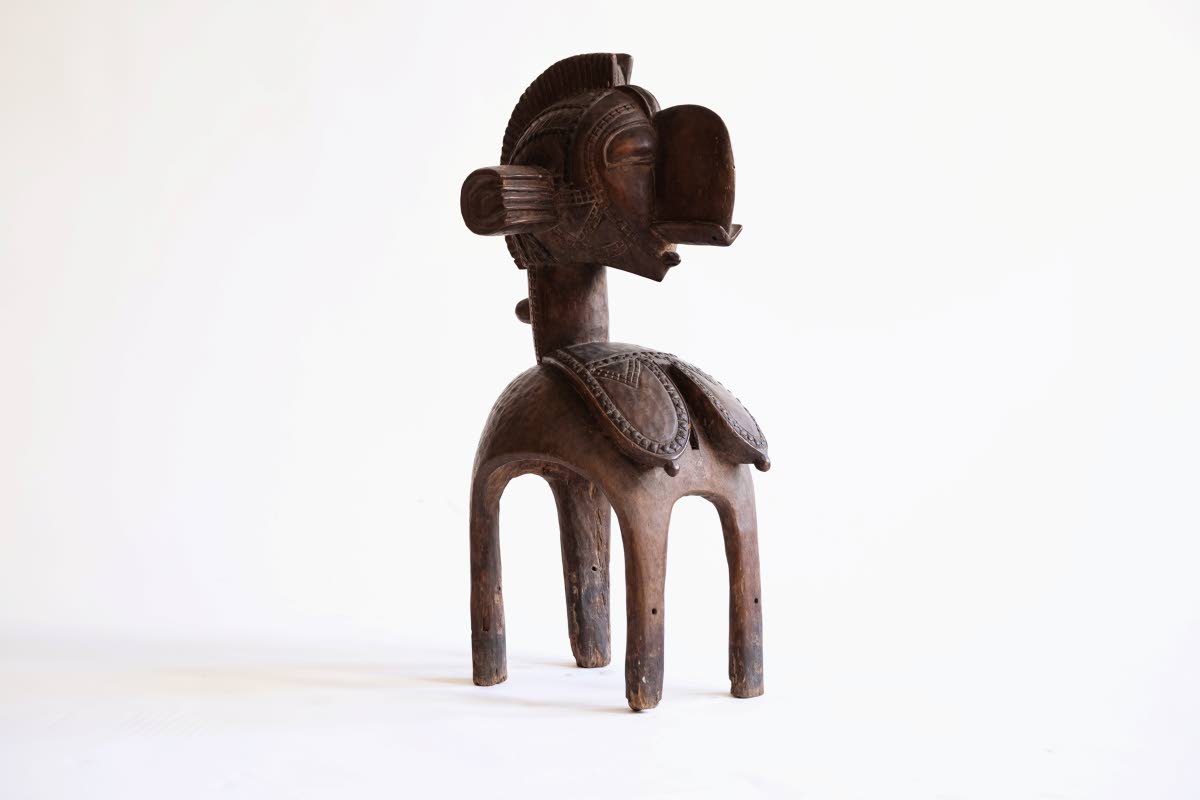 Nimba headdress from Guinea.
-
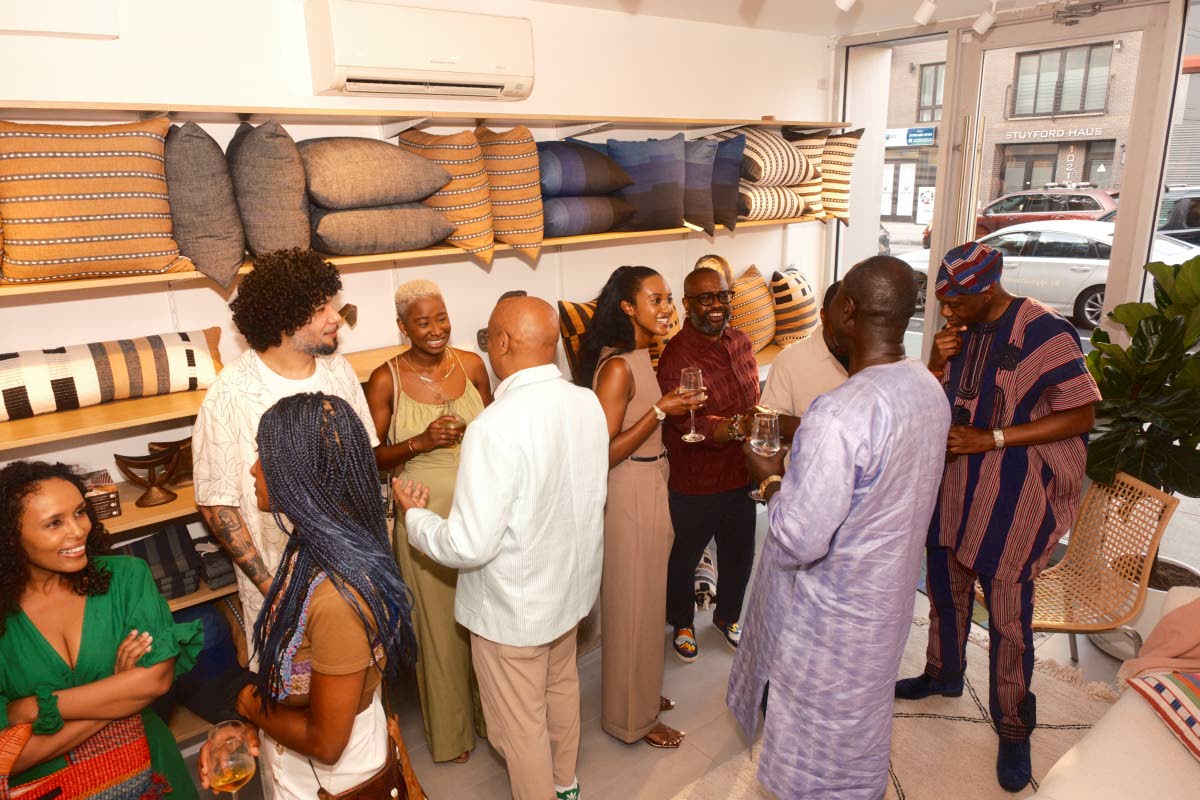 Asfaw hosted The Curator’s Table at Bole Road Textiles in Brooklyn in July. The invite-only, intimate dinner was attended by African art curators, artists, collectors and black art-adjacent creatives and professionals.
-
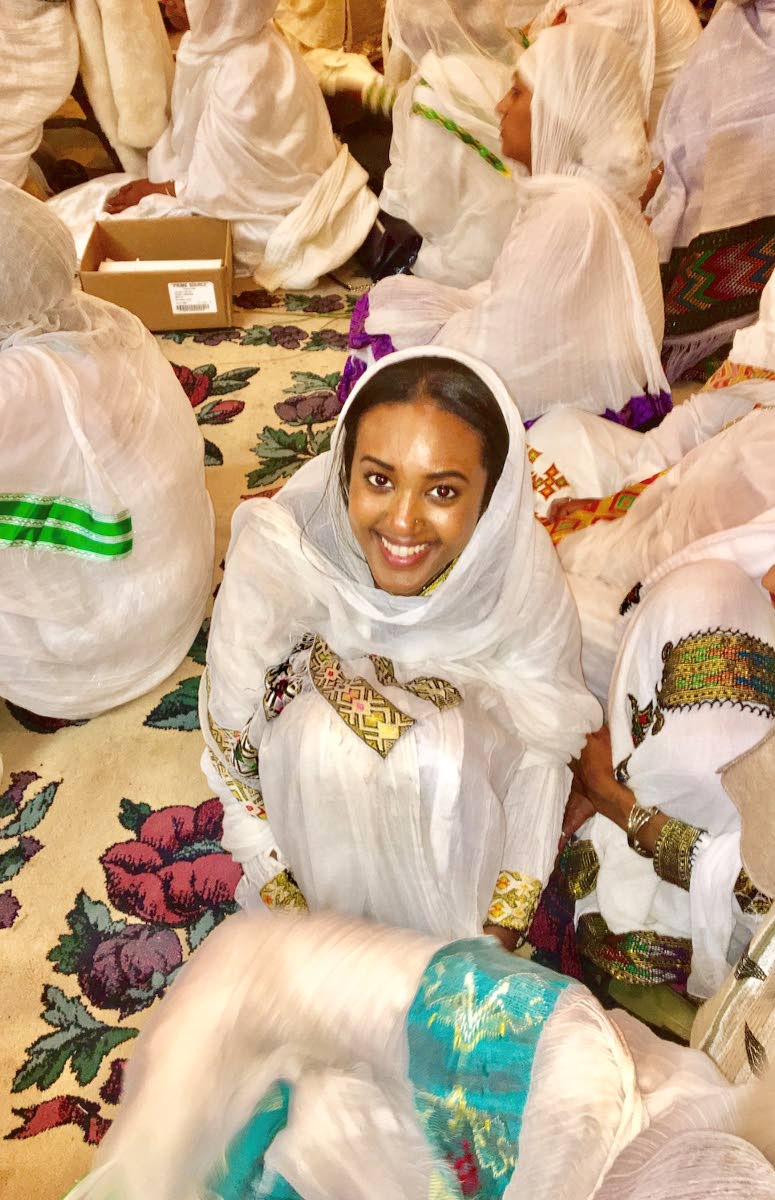 left: A 20-year-old Asfaw was in attendance at an Ethiopian Orthodox Church service in East Africa in 2012.
-
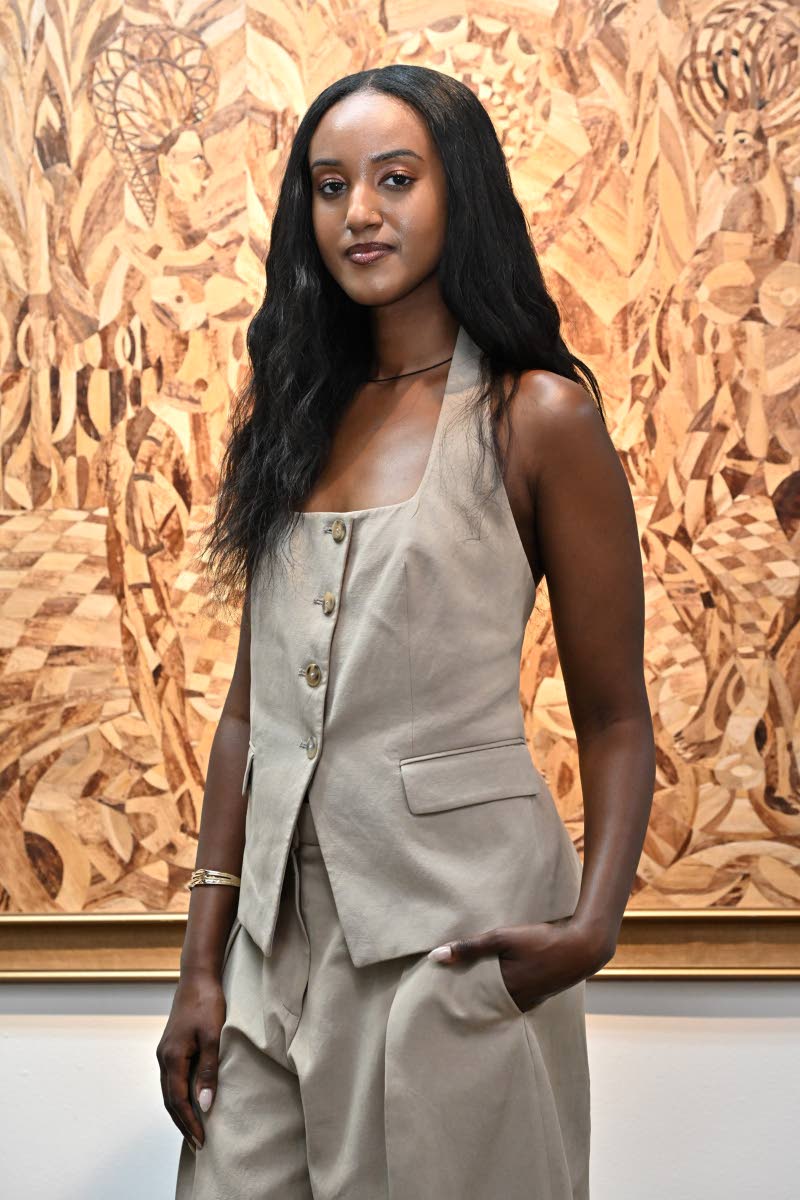 Seble Asfaw traded in a cushy tech position at ‘The New York Times’ to follow her passion to be an online art gallerist full-time last year.
Familial tragedy nudged Seble Asfaw to turn a passion side-project into a full-time pursuit. “I lost my father, uncle, and nephew all within a three-month span,” the Ethiopian-American recalls of the emotional gut-punch that hit two years ago. “Something about death is that it reminds you that life is short, and I really wanted to seize the moment and not regret anything.”
With her spirit awakened, Asfaw made a bold choice to walk away from a plum cybersecurity job at The New York Times. She dove headfirst to live out a childhood dream, first conceived when she was 12 years old: sharing her love of African art with the world. “There was a lot of comfort in working in corporate, but there are also a lot of cons, too, because it takes so much of your energy and time. This was really something I wanted to do, and it was definitely the best decision I made,” Asfaw told The Sunday Gleaner.
Misgana African Art is Asfaw’s baby. Birthed in 2019 as an Instagram account, five years on, it is now an online art gallery retailing a treasure trove of authentic artwork sourced from the Mother Continent. “I was collecting traditional African art originally for close to eight years. When I first started, I realised that there were so few black collectors, dealers, galleries, curators, and even authors of African art literature,” she recalls. “I wanted to help get more people of colour, specifically black people, interested, invested, and learning about African art.”
She explains that Misgana’s origins on social media were “to share my love for traditional art, and began getting a lot of questions from black collectors like ‘Can you connect me to different galleries?’ or ‘Where are places I can buy traditional African art from?’ I started connecting them. Then, I wanted to provide a better and truer point for people, so I started Misgana in the form of a gallery last year”.
THE GENESIS
She vividly remembers visiting Ethiopia as a child with her mother one summer and the deep resonance their visit to the countryside had. “I was watching the weavers going about their work and started noticing the different artefacts that were used in daily life. I was really drawn to them and came back from that trip when I was 12 and thought to myself, ‘I’m going to have an art gallery one day where I can show off this amazing art.’”
Misgana’s founder and curator was animated as she shared her entrepreneurial story in a Sunday Gleaner Lifestyle interview at the National Gallery of Jamaica on a late August weekday afternoon.
The Brooklyn-based online gallerist was on The Rock with her Jamaican-blooded, New York-born hubby, emergency room physician Kurtious Loney-Walsh, for a late summer trip. The couple, who tied the knot on March 6 on the sixth anniversary of when they first met, were here for the third iteration of an annual back-to-school initiative Loney-Walsh hosts in St Mary in memory of his late great-grandmother, Eliza Wright, at Albion Mountain Primary School. It is the school both his mother, Lavern Walsh, and grandmother, Dorthy Walsh, attended in their youth. Backpacks, school supplies, laptops, and tablets were awarded to students in the separate age group competitions for the Aunt Lize Spelling Bee, so named in homage to the dearly departed family matriarch.
Asfaw, chicly attired in a camel-toned buttoned vest and wide-legged trousers, is relishing her Caribbean vacay as she always does. “I love Jamaica. I come two to three times a year. Kurtious and I have been together for six and a half years, and during the entire time of our relationship, we have been visiting his family. Jamaica reminds me of my home country, Ethiopia. I think the greenery, the lifestyle, the connection to the earth, the spirituality, even though the paths are different, but at the root, we are the same,” she said.
As our walking conversation moves from iconic paintings and sculptures in The Kapo to the Edna Manley Galleries on the first floor of downtown Kingston’s National Gallery, Asfaw sheds light on her life pre-Misgana.
Her entrepreneur father, Makonnen Asfaw, and social worker mother, Berhanne Makonnen, migrated from East Africa to the United States in the early 1980s and settled in Seattle, Washington. In their newly adopted homeland, the Asfaw family grew, with the stork delivering Seble. Then came her four-year-younger brother Ezra, with the pair being first-generation Ethiopian-Americans.
Higher learning saw Seble securing a bachelor’s degree in international business from Western Washington University, quickly followed by a master’s in business management from Seattle Pacific University. However, something still felt missing within her. “I always had an appreciation for art, [aesthetics] and design, but I was never really able to foster that love while I was living in Seattle. I come from an immigrant household where the focus is on school and getting a good job, and so it never seemed like an option for me to be able to chase my interest in art,” she admitted.
A move from her northwestern home state to The City That Never Sleeps on the East Coast to accept a tech job at The New York Times brought exciting new chapters for the then-27-year-old. “I was drawn to the art scene and the energy of New York. Thank God I did because Misgana was able to come to fruition because of that, and I was able to be exposed to so many artworks and artefacts,” she surmised.
ARTFUL LOVE STORY
Not only was the move the starting point for Misgana, there was a meet-cute moment with her future hubby. “We met when he was in medical school. We happened to cross paths in front of a Brooklyn hospital. I had just moved to New York, and he told me he would show me around the city, and he did,” she recalled with a broad smile. Two weeks after meeting, they went on their first date at Miscellaneous, the Thai restaurant that was close to her house. “We had dinner there. He was very quiet. He wasn’t shy necessarily, but I talked most of the time on our date. There was something about him. I liked his energy and company and wanted to see him again,” she shared.
Kurtious was smitten, too, and asked if she was interested in a second date. Two days later, they were at a karaoke brunch. “It was there that I learned he could sing. He sang Shai’s If I Ever Fall In Love. Six years later, we got married on the day we met in front of the hospital and had dinner at Miscellaneous, where we had our first date,” she recalled. “He’s the greatest person I have ever met. He does so much for the community and people in his life. I have never seen someone give so honestly. It’s been amazing and a very divine relationship for me.”
EXPANSIVE COLLECTION
Talk resumes of her art-focused business. In the present day, a scroll on Misgana’s website showcases an expansive collection of traditional African artefacts and artwork. “There are masks, figures, sculptures, functional and utilitarian pieces. Nothing was made for art’s sake. These are pieces that had a purpose and a reason they were made, other than to be looked at,” Asfaw noted of the ever-expanding archive she has amassed and sold to buyers in North America, throughout Europe, Asia, and most interestingly, even Africa. “They are works from different tribes and regions across the continent. I source pieces from all over that are authentic and are either spiritual or functional work.”
The operational model of her one-year-old company sees her directly interfacing with dealers. “They will either bring the pieces to New York, and then I sift through hundreds, thousands of pieces and select ones that I think are really interesting and beautiful or authentic because there are a lot of unauthentic pieces,” she shared. “I go to East Africa as my family is from Ethiopia, and I am able to source pieces there, and sometimes I am able to get pieces from other East African countries [such as] Rwanda, Kenya, Sudan, Somalia, [and] Congo, and Ivory Coast, Benin, Ghana, and South Africa. They are usually created by craftsmen in local communities.”
As to the direction she sees Misgana heading. “There are no experts in this space. I know there are a lot of people who claim to be experts in traditional African art, but I don’t believe there is a way to be an expert in a whole continent and the diversity of all the different regions,” Asfaw posits. “I am always learning and can be an example of a learner, and continue to help others learn as well and provide resources. I don’t know all the answers, I don’t know all the tribes, the communities, the rituals, and the pieces. But it is so beautiful to be able to learn and see something and have a connection to it and understand the meaning behind it. It’s such a beautiful bridge”
The 33-year-old opined to Sunday Gleaner Lifestyle that in Western culture, “sometimes with galleries and museums, we are so interested in the meaning behind something, we have to read a lot of literature and actually don’t let our spirit guide us to what the meaning truly is. With so much technology, it is great because we have so much access to information, but being able to physically see a work and experience it and the energy it exudes is far more powerful”.
She is intent on cultivating an educational space for Misgana to make meaningful connections. To this end, Asfaw has taken a strategic approach to hosting event gatherings. “I want to get collectors together so they can be able to build community with one another. I recently hosted a dinner in July in Brooklyn called The Curator’s Table with a group of 18 black artists, designers, and collectors, folks invested in African art. I [have] started to build a community.”
The online gallerist also has a vested interest in staying current with the art scene in which she exists. She flies to Paris each September to attend the Parcours des Mondes, the world’s largest tribal art festival, to ascertain what is culturally relevant.
As to what she wants to strike off Misgana’s to-do list next, Asfaw envisions an eventual shift from an online to a physical space. “I’m in Brooklyn, and gallery spaces are expensive and limited. But I am working towards getting a place one day, and I am sure it will happen when the time is right.”
lifestyle@gleanerjm.com
CREDITS
Shot on location at the National Gallery of Jamaica.
Our thanks to National Gallery of Jamaica Acting Senior Director Nadine Boothe-Gooden and Chief Curator O’Neil Lawrence for their hospitality.