Seya Wilson | Hurricane Melissa and the climate future we cannot ignore
Loading article...
-
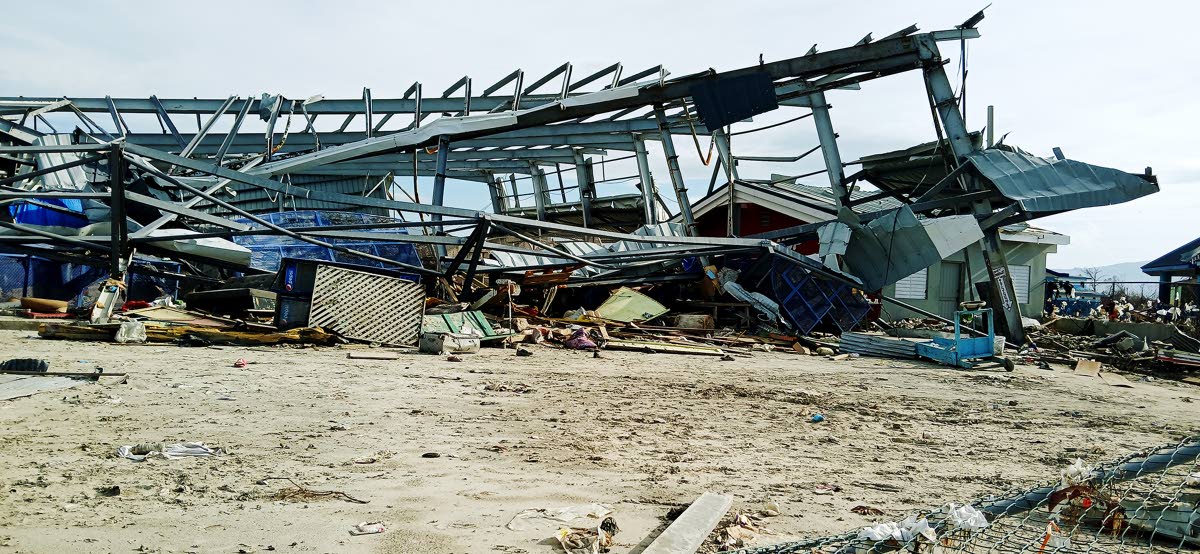 Mangled metal frame of Black River Market after Hurricane Melissa on October 28, 2025
-
 Seya Wilson
Hurricanes of Melissa’s intensity are not meant to appear with such frequency, nor develop such destructive force just moments before landfall. Yet here we are, facing the climate reality scientists have warned us about for decades.
Homes reduced to rubble, coastal infrastructure twisted apart, farmlands erased, and livelihoods swept away now lie before us. These images reveal not only the scale of devastation, but the sobering truth that extreme weather events are becoming more unpredictable and more powerful.
Hurricane Melissa provided a clear window into a global climate system undergoing rapid destabilisation. Worldwide, heatwaves, floods, droughts, and wildfires are breaking records at a pace that leaves little doubt about the direction we are heading. Hurricane Melissa belonged to the same climate-driven pattern as the devastating floods that repeatedly struck Durban, South Africa — a city I came to know intimately during my graduate research with the University of Johannesburg – as I saw how climate shocks intersect with social vulnerability. Those experiences now offer valuable lessons for Jamaica.
DEADLY FLOODS
Durban has endured a relentless cycle of climate disasters over the last decade. The deadly floods of 2019 and 2022, dropping more than 300 mm of rain in under 48 hours, killed hundreds, displaced thousands, and caused sustained economic and infrastructural damage. These events were not isolated accidents but part of a continuous pattern of intensified rainfall linked to a warmer atmosphere. Jamaica experienced this destabilisation in the form of a single catastrophic event, while Durban faced it repeatedly. The geographic expression may differ, but the underlying climate volatility is shared.
One clear parallel between Jamaica and Durban is the geography of vulnerability. In Durban, informal settlements located along floodplains and unstable slopes suffer the worst impacts, not by choice, but by lack of affordable, safe alternatives. Similarly, in Jamaica, the communities hardest hit by Melissa were rural, coastal, low-income, and historically underserved by planning systems. Houses not designed to withstand strong winds collapsed, and families with insecure land tenure had limited capacity to protect themselves. Whether in Durban or Jamaica, disaster amplifies existing inequalities.
Perhaps the most important lesson from Durban is the gap between climate planning and climate implementation. Durban earned global recognition for its Climate Action Plan and Climate Change Strategy. These documents were thorough, community-focused, and scientifically robust. Yet many residents still lacked basic knowledge about what to expect during severe weather, what warning signs to look for, or what resources existed for support. Plans alone could not protect people; information, communication, and trust were the missing components.
CYCLE OF SHOCK
This is where Jamaica must respond decisively. In a climate era characterised by misinformation and public uncertainty, a National Climate Change Education and Sensitisation Programme is necessary. Communities cannot prepare for what they do not understand. Resilience requires that Jamaicans know why storms are intensifying, how their own actions contribute to risk or safety, what government agencies are responsible for responding, and what role citizens must play before, during, and after disasters. Without broad public understanding, the cycle of shock, loss, confusion, and slow recovery will repeat with each new event.
Drawing on lessons from Durban, and guided by what we know about resilience, Jamaica must accept that Hurricane Melissa was not an anomaly. It was a preview of the climate future we are entering. Warmer sea surface temperatures are enabling rapid storm intensification- Category 4 and 5 storms are becoming more common. Slower-moving systems are producing prolonged rainfall and flooding. All signs indicate that Hurricane Melissa will not be the last event of this scale.
The question now is how Jamaica transforms. Resilience must be treated as a national development priority, not a disaster-response exercise. Strengthening community networks is central. During Hurricane Melissa, people rescued neighbours, shared resources, and often responded faster than formal systems could. Community-based preparedness networks must therefore be formalised, supported, and integrated into national disaster planning. A climate-educated population is the foundation of any such system, because when communities understand how disaster response works and what actions they can take, rebuilding becomes faster, more coordinated, and grounded in a shared sense of unity.
Investment in climate-resilient housing is also essential. Many homes destroyed by Hurricane Melissa were never engineered for high-intensity storms. Jamaica must expand access to subsidies, grants, and technical guidance for safe construction and retrofitting, especially for low-income households.
Where relocation is necessary, it must be done with full community engagement, transparency, and respect — avoiding failures observed in Durban where poorly executed relocations created new vulnerabilities.
APARTHEID AND COLONIAL-ERA SYSTEMS
Land governance must also be strengthened. In both Durban and Jamaica, insecure land tenure heightens risk, reflecting long histories of land dispossession shaped by apartheid and colonial-era systems. Residents living on marginal lands often cannot invest in safer structures and are left with limited options during disasters. Jamaica must continue land regularisation efforts while enforcing safe development and expanding access to suitable alternative settlement areas.
Hurricane Melissa provides Jamaica with an opportunity to rethink how we build, how we educate the public, how we govern, and how we prepare for the climate future we know is coming. Durban’s experience shows what is at stake when climate education is weak and when institutional plans outpace the public’s understanding. Jamaica stands at its own moment of choice. If Hurricane Melissa is our warning, then a climate-educated and resilience-ready population must be our response.
Seya N. Wilson is a climate resilience researcher and a health and environment project manager. Send feedback to columns@gleanerjm.com